

Price When Reviewed
This value will show the geolocated pricing text for product undefined
Best Pricing Today
$1,999
With all the glitz and glory going to the new MacBook Pro with PROLED XDR Display, it’s easy to overlook the new M6 MacBook Pro. In case you missed it, Apple updated its base-level MacBook Pro with a chip upgrade the day before the PROLED XDR Display laptop made its debut.
I mean, it’s hard to get excited about a mere chip upgrade when the other laptop has so much more to offer. But the reality is that the M6 MacBook Pro is the laptop for the rest of us: a package that combines the speed and features prosumers want while satisfying even more demanding pros.
The laptop we reviewed is the 14-inch MacBook Pro with an M6 chip, the $1,999/£1,999 model. Here are its specifications.
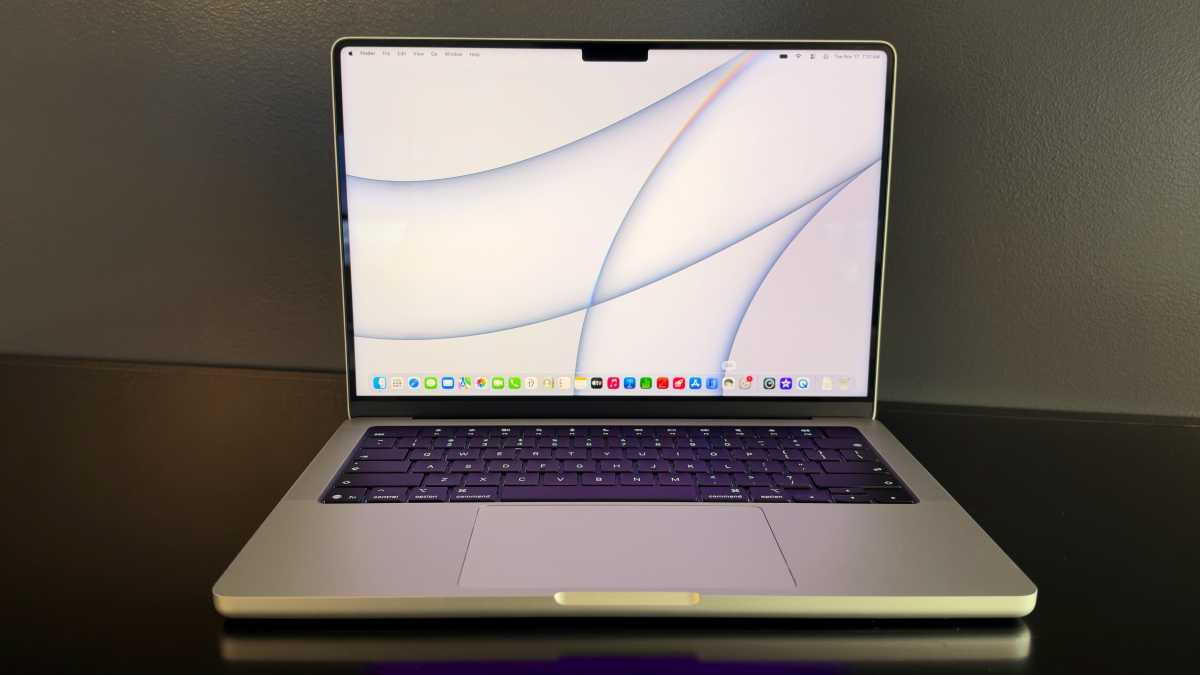
Roman Loyola/Foundry
Since the only difference between the new M6 MacBook Pro and the M5 model it replaces is the chip, this review focuses on the performance upgrade.
The M6 introduces a new CPU core configuration, with 2 super cores, 4 performance cores, and 6 efficiency cores. The super cores are new and designed for single-core tasks. The performance cores handle multicore processing, while the efficiency cores are designed for background tasks. The previous M5 chip had 10 CPU cores: 4 performance cores and 6 efficiency cores.
The M6 offers a 16 percent boost in Multi CPU speed and an 11 percent increase in Single CPU performance over the M5 it replaces. That’s on the low end of what we’ve seen in other chip transitions. While it’s always nice to see bigger improvements, the truth is that in regard to the overall performance that Geekbench measures, the M5 made everyone happy, and the M6 doesn’t change that.
Our Cinebench 2026 Multi-core result is a tad better, showing an 18 percent improvement, while the Single-core result was 9 percent better. Cinebench reflects performance that media producers desire, so the M6 isn’t really what a full-time pro would want; they’re looking at the M5 Pro or M5 Max. But for users who do occasional work, the M6 will do.
Our HandBrake result was 20 percent faster on the M6 MacBook Pro. That’s a difference you can notice. It’s nice to see that Apple continues to make progress with its video codec processing. It’s made dramatic improvements since the M1.
That codec processing improvement we saw with HandBrake is also apparent here in when exporting a 4K video file at the High setting. The M6 MacBook Pro was 30 percent faster, a huge time savings that producers will enjoy.
With the M5 MacBook Pro, Apple drastically improved the SSD speed, and the M6 MacBook Pro offers a slight but imperceptible improvement. It’s still double that of the M4 and older. The M5 Pro and M5 Max offer even better speeds that are nearly double that of the M6, though those laptops are more expensive. And in case you’re wondering, there will not be M6 Pro or M6 Max chips, because Apple wants to fast-track the M7.
Apple continues to improve Metal performance with its chips. The M6 is 23 percent faster than the M5 in the Geekbench 7 Compute test. Even the OpenCL performance jumped 26 percent, which will help with performance of ported PC games.
The M6 MacBook Pro is a good Mac for high-end games, but serious gamers will want more performance, which you can get in an M5 Pro, but you need to pay a higher price. (Note that there are some results missing from this test because we didn’t start testing some games until later.)
If AI is your thing, you might want to wait for the M7 if you can. Reports say that Apple skipped further M6 series development because it wants to focus on the M7 and AI performance. AI is faster than it’s ever been on the base M chips, but there’s a chance the M7 will provide an even bigger boost.
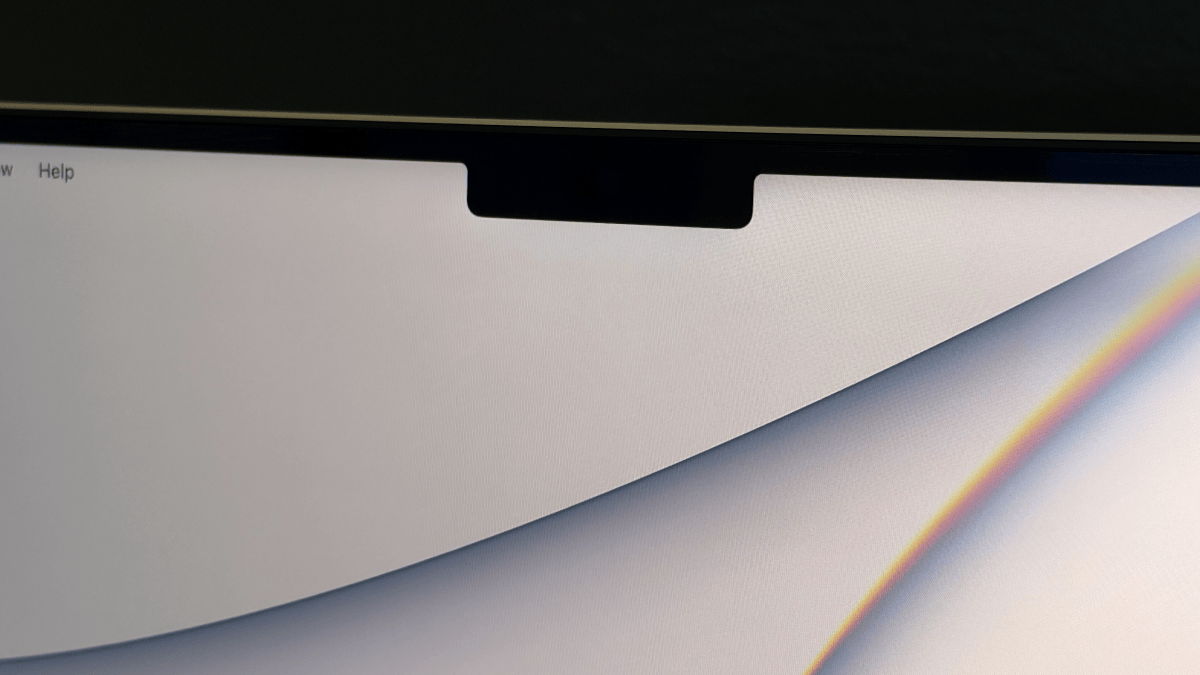
The MacBook Pro has a notch to house the FaceTime camera.
Roman Loyola/Foundry
Apple is still using a 72.6-watt-hour battery that offers “up to 24 hours of video streaming” and “up to 16 hours of wireless web” access. Our battery life test involved running a 4K video saved to the Mac’s SSD. With the display set to 150 nits (which is around the midpoint of the brightness scale), the video played on a loop until the battery was fully depleted. Again, the MacBook Pro exceeded Apple’s estimate, with this M6 model lasting 27.5 hours, a few minutes longer than the M5 MacBook Pro.
In the U.S., Apple includes a 70W power adapter with the M6 MacBook Pro, but fast charging, which charges the battery to 50 percent in 30 minutes, requires at least a 96W power adapter. You can opt for an Apple 96W adapter when buying the laptop, or you can buy a third-party adapter. Outside the U.S., a power adapter is not included.
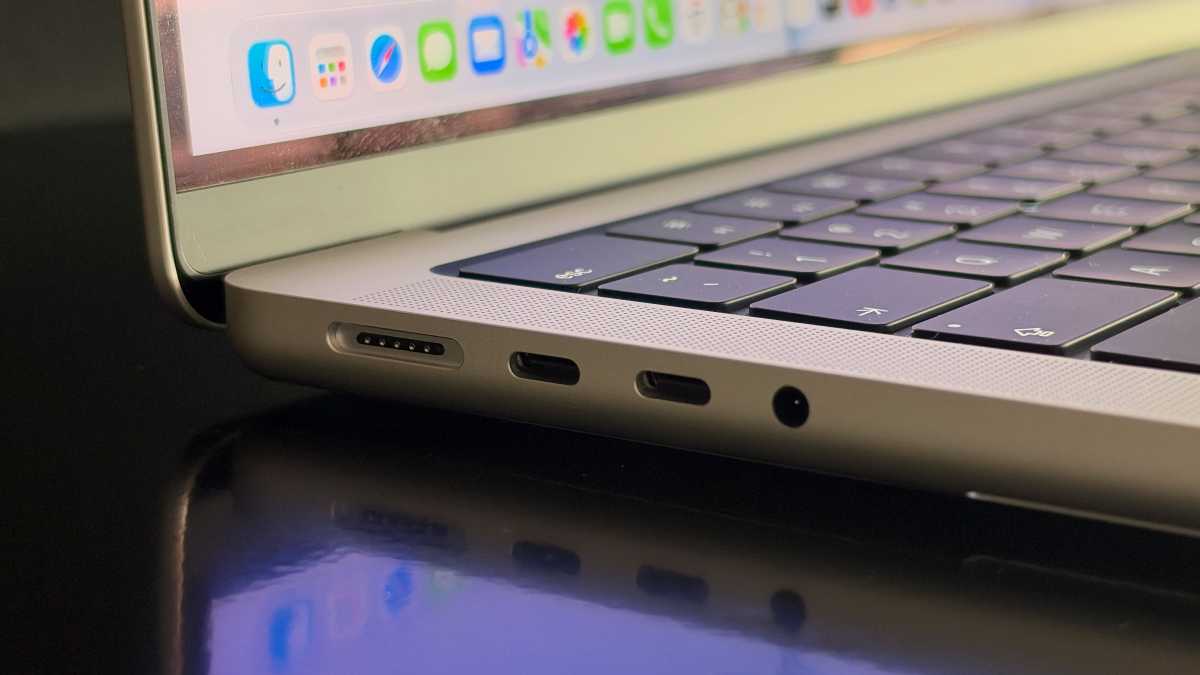
MagSafe, two Thunderbolt 4/USB-C, 3.5mm audio jack.
Roman Loyola/Foundry
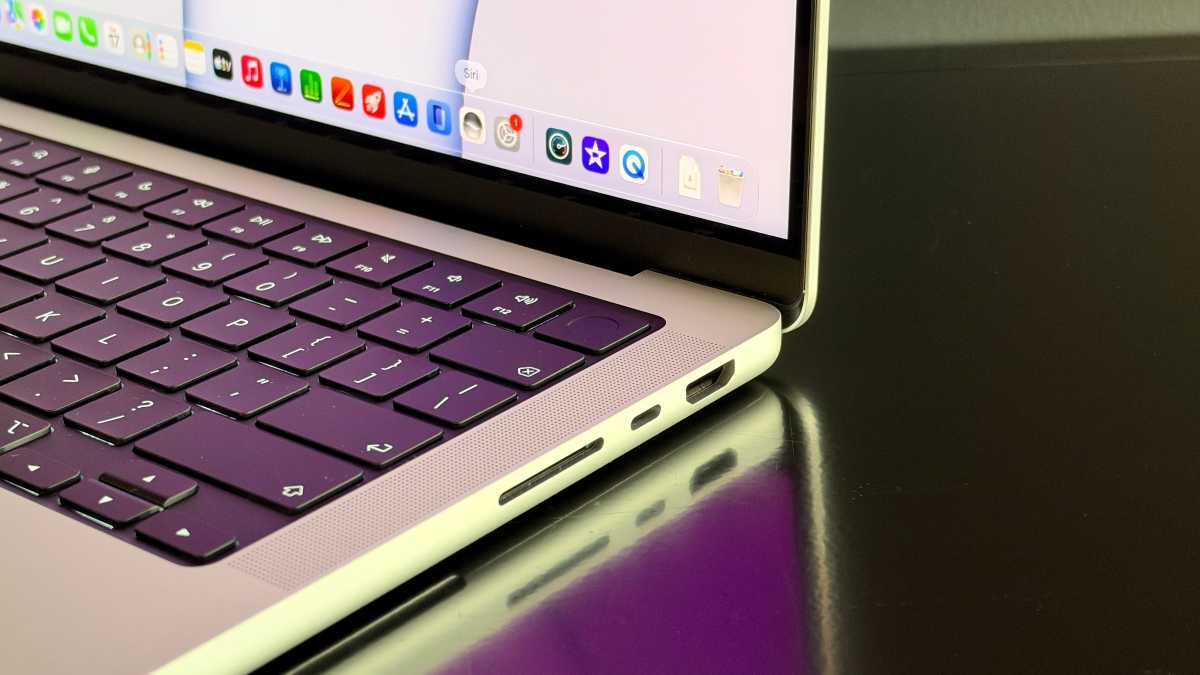
SDXC Card slot, Thunderbolt 4/USB-C, HDMI.
Roman Loyola/Foundry
The other major upgrade with the M6 MacBook Pro involves wireless connectivity. Apple upgraded to Wi-Fi 7 (802.11be) and Bluetooth 6, so connections will be faster with devices that can take advantage of the new standards.
Everything else about the M6 MacBook Pro is the same as the M5 MacBook Pro. That includes:
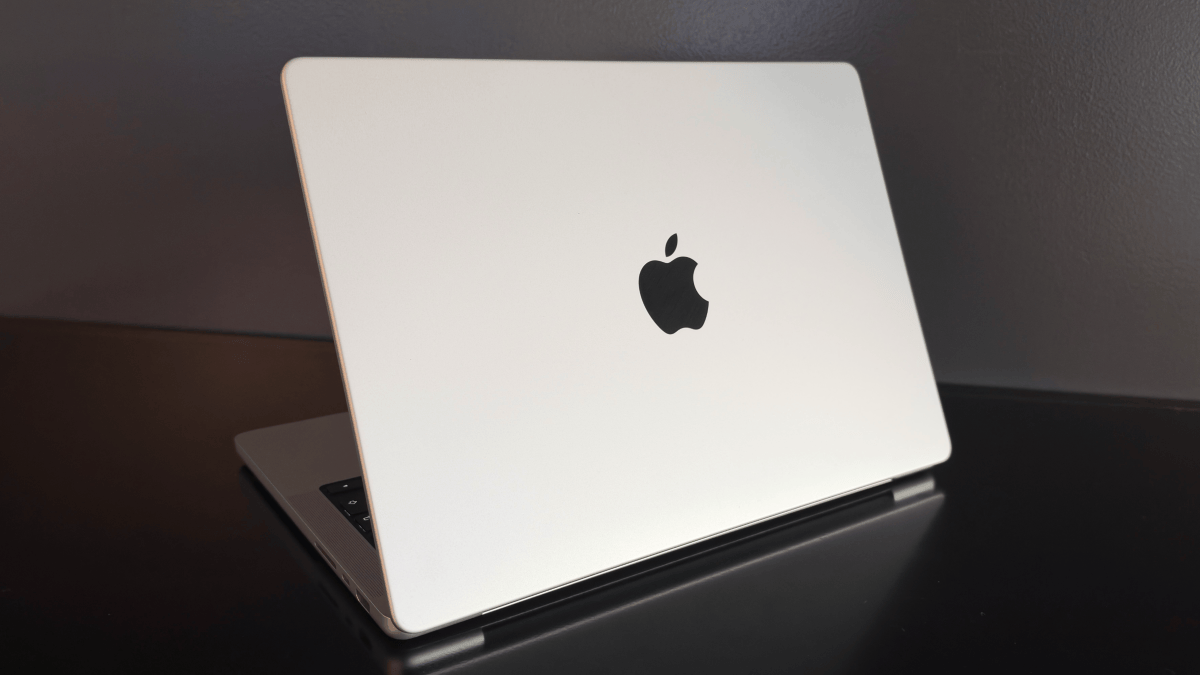
The M6 MacBook Pro is available in Silver (pictured) and Space Gray.
Roman Loyola/Foundry
This model of MacBook Pro, the one with the base M-series chip, has always offered a very good combination of price and performance. That combination looks even more attractive when the new base chip is introduced in the MacBook Pro while the MacBook Air still has the previous-generation chip (in this case, the M5). You get a slight performance boost with the new chip, along with the features that separate the two laptops, including the display technology, SSD capacity, ports, and a bigger battery.
However, the MacBook Air is scheduled to be updated with an M6 chip early next year. That means when the new Air arrives, the performance advantage the M6 MacBook Pro currently enjoys will disappear, and its value proposition will take a hit.
With that in mind, if your priority is getting the most performance for the price, and you can wait, then wait for the MacBook Air. When the M6 MacBook Air arrives next year, you’ll be able to get the same chip performance as the M6 MacBook Pro and save several hundred dollars. If you want a bigger performance boost, wait for the M7, which should arrive next fall. If you absolutely can’t wait, you can feel confident in your investment in the M6 MacBook Pro. It’s a fantastic laptop with excellent performance at a competitive price.
The M6 MacBook Pro remains a great, affordable alternative to its higher-end brethren. It’s not as fast as the M5 Pro chip in the next-step-up laptop, but it is $500 cheaper—and that ain’t chump change, nosiree.